3D Holographic Signs 2026 – Futuristic, Interactive, and Immersive
3D holographic signs are transforming the signage and display industry in 2026. By combining holographic projection technology with 3D visuals, these signs create immersive, attention-grabbing experiences that engage audiences like never before.
Why 3D Holographic Signs Are Trending in 2026
Futuristic signage is in high demand for branding, retail, and events. Holographic 3D signs are popular because they:
- Capture attention instantly with floating, interactive visuals
- Offer dynamic and customizable content
- Work for indoor exhibitions, retail spaces, and entertainment venues
- Enhance brand perception with cutting-edge technology
Types of 3D Holographic Signs
- Holographic Display Fans: Spins LED blades to project 3D visuals in mid-air
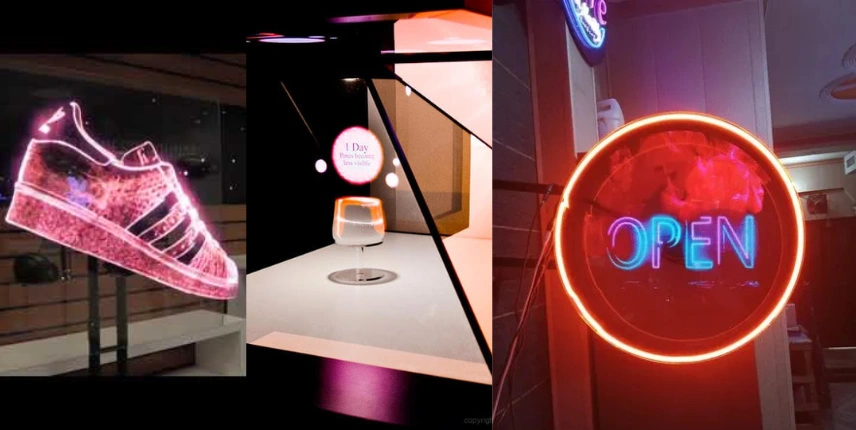
- Holographic Pyramid Displays: Projects floating 3D images above a flat surface
- Interactive Holographic Panels: Combines 3D visuals with touch or motion sensors
- Augmented Reality (AR) Holograms: Integrates digital content into physical spaces
Applications of 3D Holographic Signs
- Retail & Showrooms: Product showcases and advertising
- Events & Exhibitions: Trade shows, concerts, and product launches
- Corporate Branding: Lobbies, reception areas, and interactive displays
- Entertainment & Museums: Immersive storytelling and visitor engagement
Benefits of 3D Holographic Signs
- Highly engaging and memorable for audiences
- Customizable and dynamic content
- Saves space compared to traditional displays
- Futuristic and modern aesthetic enhances brand image
Maintenance Tips for Holographic Signs
- Keep LED fans and projectors dust-free
- Avoid excessive humidity or heat
- Check software updates and calibration regularly
- Ensure safe installation to prevent mechanical damage
FAQ – 3D Holographic Signs 2026
What are 3D holographic signs?
They are signs that use holographic projection technology to create floating, 3D visuals, making the signage interactive, futuristic, and highly engaging.
How do 3D holographic signs work?
They use LED fan displays, holographic pyramids, or AR technology to project 3D images into space. The visuals can be animated, branded, and interactive for maximum audience impact
Can I customise holographic 3D signage?
Yes! You can customise content, colours, animations, size, and interactivity to match your brand or event requirements.
Where are holographic signs commonly used?
- Retail stores and product showcases
- Trade shows and exhibitions
- Corporate offices and lobbies
- Entertainment venues, museums, and interactive installations
How do I maintain 3D holographic signs?
- Keep projection devices clean and dust-free
- Avoid exposure to extreme heat or moisture
- Regularly update software and calibrate displays
- Secure installation to avoid mechanical damage
Conclusion:
3D holographic signs are the pinnacle of futuristic signage in 2026, offering interactive, immersive, and visually stunning experiences. Perfect for retail, branding, events, and entertainment, these signs help businesses and spaces stand out with next-generation technology. 3D Holographic Signs
A breakthrough trend—holographic projections combined with physical 3D boards for eye-catching displays.
Top 10 3D Sign Board Designs 2026, 3D Signage Trends 2026, Modern 3D Sign Boards, Illuminated Acrylic 3D Letters, Wooden Carved 3D Signs, Metallic 3D Lettering, Neon Infused 3D Signs, 3D LED Edge Lit Panels, Textured Stone and Marble Signs, 3D Holographic Signs, Eco-Friendly Recycled Material Signs, Mixed Media 3D Signs, 3D Digital Sign Boards with Motion Effects, Innovative 3D Signage Ideas, Custom 3D Branding Displays, Futuristic Sign Design 2026, Creative Business Sign Boards, Smart LED 3D Signage, Signage Inspiration for 2026, Modern Storefront 3D Letters
About the Company
Founded and guided by Mr Mudasir, CEO and co-founder, Display Signs has become a trusted name in the Dubai signage and branding industry. The company focuses on delivering custom-built 3D signs, illuminated LED boards, acrylic and metal lettering, and digital display solutions that help businesses create bold, lasting impressions. Every project is carefully designed to reflect a client’s unique brand identity while maintaining quality and durability.
Display Signs operates under the umbrella of the Golden Falcon Group of Companies, a well-established business network known for excellence in creative manufacturing and design innovation. The group also includes AlSign.ae — a leading eCommerce platform for professional signboards with worldwide shipping — and StickerShop.ae — an international online store offering premium stickers, labels, and printed branding materials for global clients.
Together, these brands form a powerful ecosystem that blends design innovation, sustainable production, and advanced technology, empowering businesses with distinctive and impactful signage solutions across the UAE and beyond.
3D Holographic Signs 2026 – Futuristic Signage for Next‑Gen Spaces
What Are 3D Holographic Signs?
3D holographic signs are advanced display technologies that project three‑dimensional visuals into space, creating the illusion of floating or dynamic imagery without a physical screen. Unlike traditional flat signage, holographic displays use light diffraction and digital projection techniques to make visuals appear depth‑rich and lifelike, offering unprecedented engagement for viewers. These systems have evolved rapidly and are now used in retail, events, corporate lobbies, museums, and public spaces worldwide.
The essence of a 3D holographic sign is that it captures attention in a way no flat sign can — blending physical and digital elements to deliver visuals that seem to float in mid‑air. This makes them ideal for modern environments where immersive experiences are a priority.
How 3D Holographic Displays Work
Unlike traditional video screens, 3D holographic displays rely on special optical systems and LED/laser projectors to create depth. There are several popular technologies used today:
- Pepper’s Ghost illusion — A classic technique adapted for modern displays to make images appear suspended in air.
- Volumetric LED displays — Multiple layered LED planes create depth that viewers can perceive from different angles.
- Laser holography — Uses lasers to generate light interference patterns that form 3D visuals.
These technologies allow complex animations, interactive content, and high‑definition 3D visuals that traditional signage simply cannot match.
Why 3D Holographic Signs Are the Future of Signage
1. Unmatched Visual Impact
In highly competitive environments like retail malls, corporate campuses, and trade shows, capturing attention quickly is vital. 3D holographic signage achieves this by presenting content in motion and depth that people instinctively notice.
2. Enhanced Engagement
Holographic displays go beyond static signage by incorporating movement and interaction. Users can engage with content that appears to react or change, improving recall and interest.
3. Fits Next‑Gen Spaces
Modern spaces — including luxury retail, smart offices, and futuristic showrooms — demand signage that matches their aesthetic. 3D holographic signs deliver a high‑tech visual language that aligns perfectly with next‑generation environments.
Top Applications of 3D Holographic Signs in 2026
Retail and Brand Activation
Retail brands are increasingly using 3D holographic displays to showcase products, run interactive campaigns, and make window displays more captivating. These holograms can feature spinning product models, animated brand mascots, or live information feeds.
Events and Exhibitions
At large expos and conventions, holographic projections allow brands to break through noise by presenting content that crowds take notice of instantly — from dynamic logo reveals to floating presentations.
Corporate Spaces and Lobbies
Modern office environments leverage holographic signage to display welcome messages, corporate visions, or interactive wayfinding, replacing static plaques with visually engaging media.
Museums and Educational Spaces
Holography enhances experiential learning by animating historical artifacts, scientific models, or cultural exhibits, making information more immersive and accessible.
How 3D Holographic Signage Compares to Traditional Digital Displays
| Feature | Traditional Digital Screen | 3D Holographic Sign |
|---|---|---|
| Depth Perception | ❌ Flat 2D | ✔ 3D Illusion |
| Engagement | Moderate | High |
| Interactivity | Limited | Possible |
| Wow Factor | Average | Exceptional |
| Installation Complexity | Lower | Higher |
| Cost | Lower | Higher |
3D holographic signage represents a premium category that trades higher setup cost for vastly superior engagement and memorability.
Key Considerations for Deploying Holographic Displays
Content Design Expertise
To maximize the impact of 3D holographic signs, content must be designed specifically for depth and motion. Standard flat graphics do not translate well into holographic space.
Technical and Spatial Requirements
These systems need reliable power infrastructure, controlled lighting environments, and professional installation to ensure visuals appear correctly from all angles.
Maintenance and Durability
Holographic equipment must be handled carefully and often requires periodic calibration and cleaning to maintain optimal performance.
Top Trends in 3D Holographic Signage for 2026
Interactive Holographic Experiences
Touchless interactivity — where gestures or movement influence holographic visuals — is becoming more common, especially in retail and events. This enhances user engagement and dwell time.
AI‑Driven Content Modulation
Artificial intelligence is being integrated to adjust holographic content based on audience behavior or environmental data, making signage highly personalized and responsive.
Integration with AR/VR
Holography is increasingly paired with augmented reality (AR) and virtual reality (VR) systems to build hybrid immersive experiences that bridge physical and digital environments.
Benefits of 3D Holographic Signs
- Higher attention and memorability compared to flat displays.
- Non‑intrusive yet highly visible, ideal for public and commercial spaces.
- Scalable content for events, shops, and corporate installations.
Challenges to Consider
- Higher initial cost compared to standard digital signage.
- Requires skilled content creation and maintenance teams.
- Environmental lighting conditions may affect visibility in certain locations.
Conclusion
3D holographic signage is quickly moving from futuristic novelty to real‑world marketing and communication tool. As technology advances and content creation becomes more accessible, businesses across retail, corporate, events, and public environments will increasingly adopt holographic displays to stand out. With its unmatched ability to capture attention and deliver immersive experiences, 3D holographic signage is set to define the future of visual communication — especially in cutting‑edge commercial and experiential spaces in 2026 and beyond.
FAQs
1. Are 3D holographic signs practical for everyday business use?
Yes — while once niche, improvements in hardware and content tools are making holographic signage viable for retail, corporate, and experiential environments.
2. Do holographic displays work in bright outdoor settings?
Ambient light can affect visibility, so outdoor deployment often requires specially engineered systems or shading.
3. How expensive are holographic signs compared to digital screens?
Initial setup and content creation costs are generally higher, but the engagement and memorability returns can justify the investment.
4. Can holographic content be updated remotely?
Yes — many modern systems allow cloud‑based content updates, enabling remote management.
5. Do holographic signs require special maintenance?
Periodic calibration and careful cleaning are recommended to maintain peak performance.